Service Single Image

I can hear, but I can't understand

Auditory processing difficulties are an umbrella of challenges that affect how the brain interprets and organizes sound. People with an auditory processing disorder often hear sounds clearly at the ear level, but struggle with what their brain does with that sound, especially in complex listening environments. It's common for individuals with APD to have normal results on traditional hearing tests, yet still experience real difficulty understanding speech, particularly in noisy rooms, classrooms, meetings, or places with echo and competing voices. These challenges can affect learning, attention, memory, communication confidence, and listening stamina.

At AudioSense, we frequently meet patients who say, "I can hear, but I can't understand," or "I do fine one-on-one, but I fall apart in noise." These experiences are real, measurable, and treatable, and they deserve a thorough assessment that looks beyond the basic audiogram.

Auditory Processing Disorder vs. Hidden Hearing Loss

APD is often confused with hidden hearing loss, because both can cause significant difficulty hearing speech in noise even when a standard hearing test appears normal. The difference lies in where the breakdown happens. In APD, the ear may detect sound normally, but the brain has difficulty decoding and organizing that sound once it arrives. In hidden hearing loss, the issue is often more peripheral and subtle, involving reduced clarity of neural sound input from the inner ear or auditory nerve, especially for complex signals like speech in noise.

In other words, APD is primarily a brain-based listening disorder, while hidden hearing loss is more of a subclinical ear-to-nerve clarity problem that doesn't always show up on regular testing. Because the symptoms overlap, our assessments are designed to explore both auditory nerve clarity and higher-level brain processing, so we can give you an accurate explanation and the right plan.


Reach Us Now!

Thank you! Your submission has been received!
Oops! Something went wrong while submitting the form.

Comprehensive Auditory Processing Disorder Testing

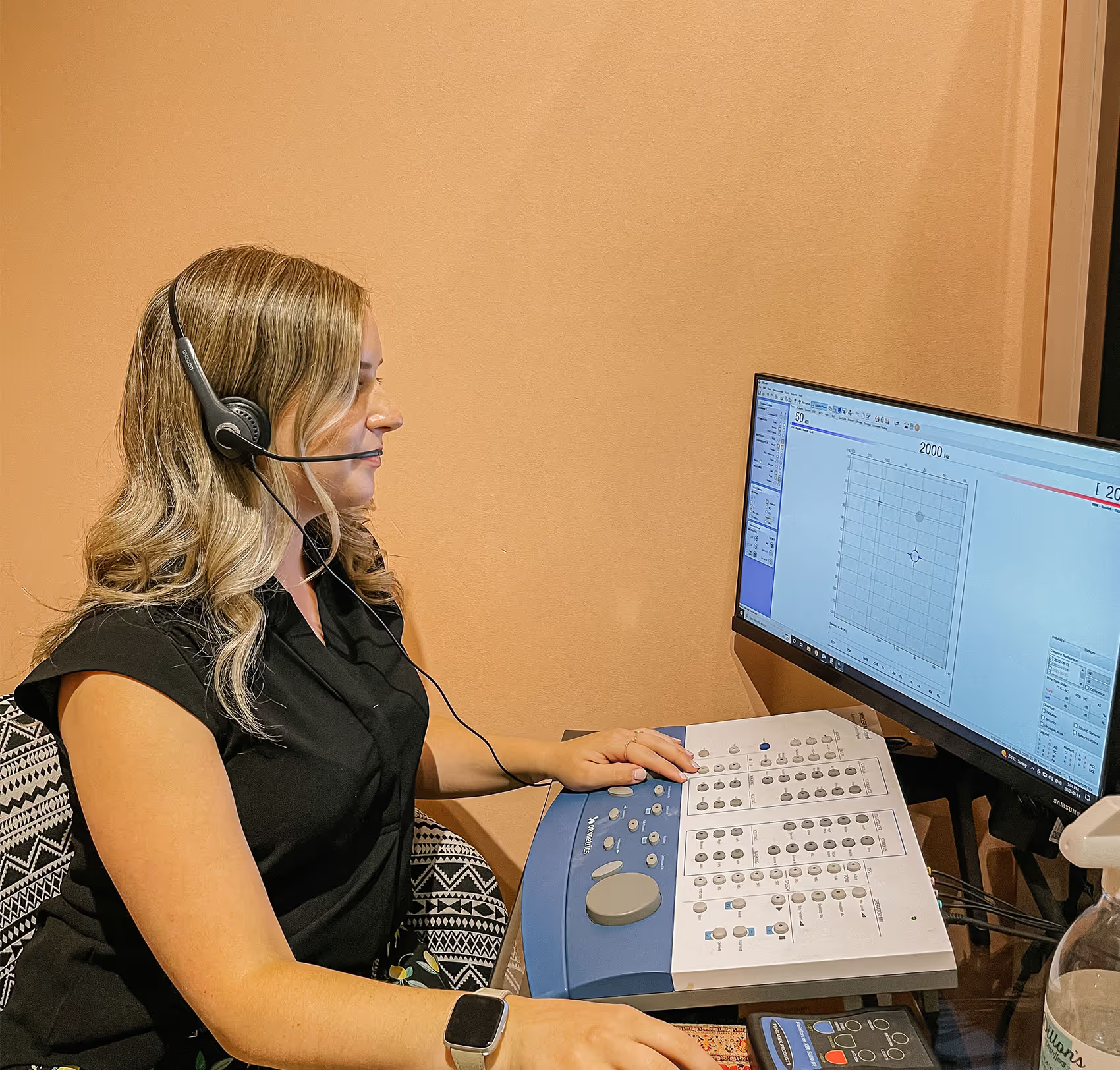
Auditory processing assessment at AudioSense is intentionally thorough. We stress the auditory system in controlled ways so we can identify exactly which listening skills are breaking down and in what environments. Your assessment includes access to two structured appointments: one for testing and one for results and personalized recommendations.

During your evaluation, we use a combination of validated batteries and specialty measures, including speech-in-noise testing, the MAPA (Multiple Auditory Processing Assessment), and the Buffalo Model of auditory processing. These tools allow us to examine different domains of auditory function such as auditory figure-ground (hearing speech in noise), auditory memory, auditory closure (filling in missing pieces of speech), binaural integration, and temporal processing.

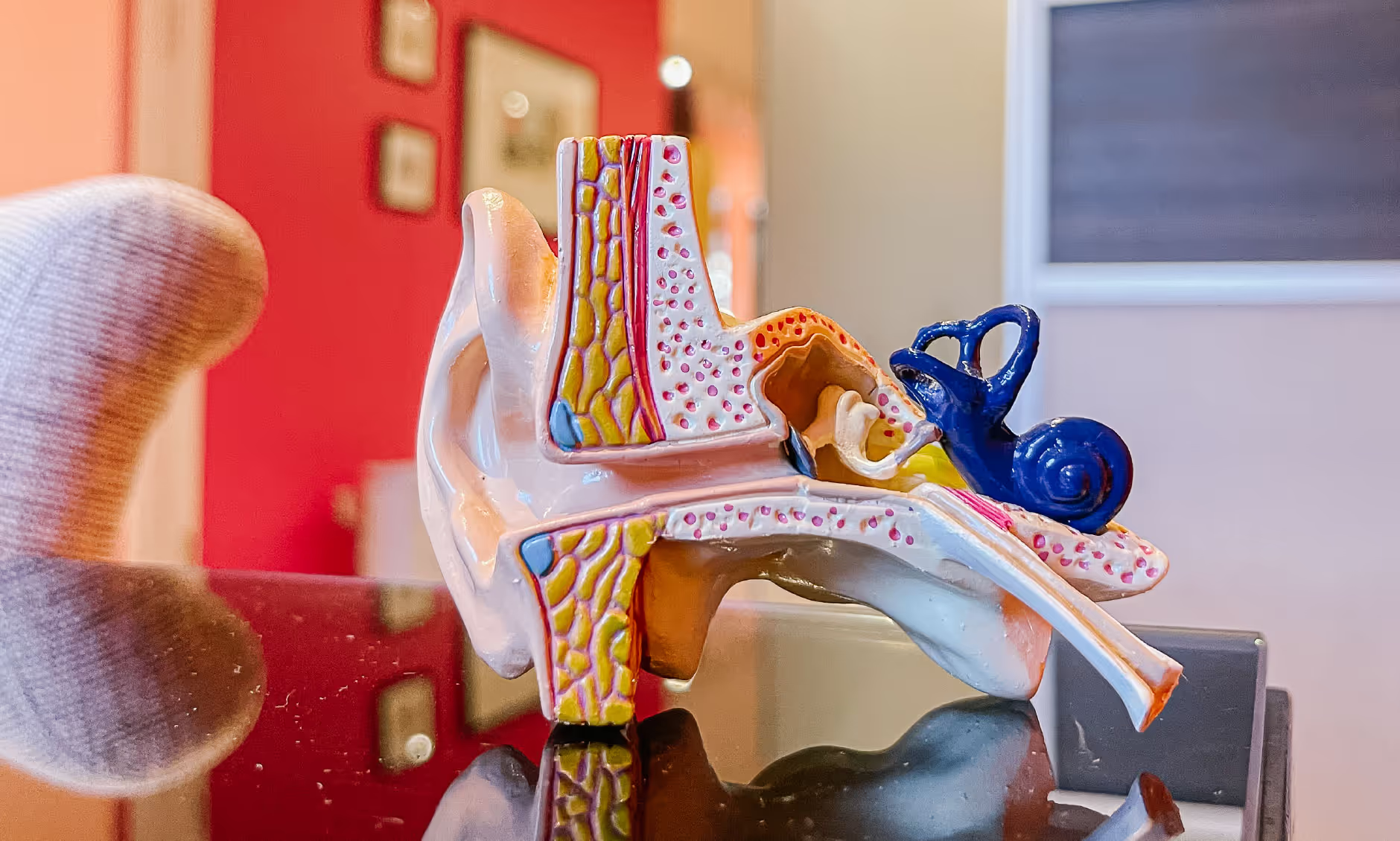
We also include objective testing, such as Otoacoustic Emissions (OAE) assessments, to verify inner-ear function and help distinguish APD patterns from subtle cochlear contributions that may resemble hidden hearing loss. When needed, we may add additional electrophysiological or neural-screening measures to ensure we're accounting for the entire auditory pathway from ear to cortex.

After testing, we don't just hand you a label. We explain your results clearly, show you what your profile means functionally, and build a care plan that fits your life, school, or workplace.

Treatment and Support for Auditory Processing Disorders

When an auditory processing disorder is identified, treatment must be specific to the profile you've demonstrated. That's why APD care at AudioSense is always personalized and multi-layered. For many patients, the first goal is improving signal-to-noise ratio. This means we help speech stand out more clearly from background sound.

In those cases, we may recommend prescriptive hearing devices designed to improve clarity, reduce listening fatigue, and support brain-based decoding. We are also a Phonak Roger Certified Partner, which means we can provide FM / Roger systems at competitive rates. These systems are especially effective in classrooms, lecture halls, meetings, and noisy environments, because they deliver the speaker's voice directly to the listener with minimal interference.

We also offer Interactive Metronome therapy, a powerful brain-timing and auditory-motor training program that has produced positive outcomes for many APD patients but is rarely offered in Ontario. Interactive Metronome supports attention, timing, processing speed, and coordination between auditory input and brain response, skills that are often central to auditory processing success. To make therapy easy and accessible, we offer Interactive Metronome in clinic or through a guided at-home program, depending on your needs and schedule.

Because APD can overlap with language-based learning, executive function, attention, and sensory regulation, we also work closely with a trusted referral network. If auditory therapy, speech-language intervention, occupational therapy, or psychological support is appropriate, we connect you with the right professionals and coordinate care so your plan is cohesive and realistic.

Throughout treatment, we focus not only on improving listening skill, but on improving daily life, helping people feel less fatigued, more confident, and more capable in the environments that matter most.

Why Choose AudioSense Toronto for APD Care

AudioSense offers one of the most comprehensive auditory processing programs in the province. Our assessments include advanced tools such as MAPA, Buffalo Model testing, speech-in-noise analysis, and OAE verification, delivered in a supportive environment by audiologists who specialize in brain-based hearing. We combine prescriptive technology, Roger/FM solutions, uncommon but effective Interactive Metronome therapy, and coordinated referrals to build a plan that actually works in real life.

If you've been told "your hearing is normal" but listening is still exhausting, we take your experience seriously, and we know how to evaluate it properly.

Book an Auditory Processing Assessment

If you or your child struggles to hear clearly in noise, follow conversation, retain verbal information, or keep up in classrooms or meetings despite normal hearing tests, an auditory processing assessment may be the missing piece. At AudioSense Toronto, we provide advanced APD testing and personalized treatment options that improve clarity, confidence, and daily listening success.

Book your auditory processing assessment today and let's uncover what your brain needs to hear and understand more easily.

Book Your Appointment Now

Frequently Asked Questions

What are the types of auditory processing disorder?
FAQ ArrowFAQ Arrow
What can be mistaken for auditory processing disorder?
FAQ ArrowFAQ Arrow
Does APD get worse with age?
FAQ ArrowFAQ Arrow
What are the signs of auditory processing disorder?
FAQ ArrowFAQ Arrow
What therapies help with APD?
FAQ ArrowFAQ Arrow

Hearing Services

Your hearing is at the heart of everything you do. Our services are designed to support you so you can stay connected to the people and experiences you love.