At AudioSense, we specialize in pediatric audiology, offering hearing care tailored to infants, toddlers, and children of all ages. Our goal is to ensure that every child has access to clear sound and the opportunity to develop in language, learning, and social development.
We see babies as young as newborns for newborn hearing screenings. These quick and completely painless tests allow us to check your baby's hearing within the first days or weeks of life. Using gentle sounds and sensitive sensors, we can detect even very small changes in hearing. Early detection is important. When hearing loss is identified early, it can be treated or managed before it impacts speech and brain development.
For infants and young children who cannot respond verbally to sounds, we use objective hearing tests such as Otoacoustic Emissions (OAE) and Tympanometry.
For babies and toddlers aged approximately 6 months to 2 years, we perform Visual Reinforcement Audiometry (VRA). In this test, your child sits on your lap in a soundproof booth while we play tones or speech from speakers. When your child responds to a sound, a friendly light-up toy or animated video "rewards" them. This teaches us which sounds they can detect in a way that's fun and non-stressful.
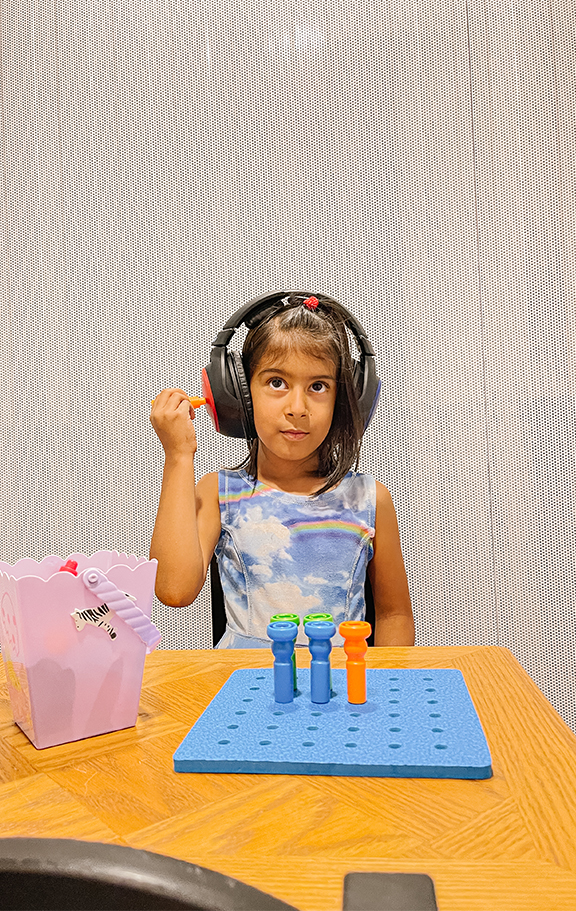
For preschoolers and school-aged children, we use Conditioned Play Audiometry (CPA). This test turns hearing into a game. For example, your child might drop a block into a bucket or put a toy on the table every time they hear a sound. This approach keeps children engaged while allowing us to measure hearing accurately across different pitches and volumes.
Older children, typically from age 6 onward, can participate in Standard Audiometry, where they raise their hand or press a button each time they hear a tone. These results allow us to create a detailed hearing profile that guides any necessary treatment, monitoring, or school accommodations.
No matter your child's age, our audiologists use advanced equipment and a calm, reassuring approach to make the testing experience enjoyable, accurate, and stress-free.

audioSense Hearing, Balance & Concussion

Parents across the Greater Toronto Area trust AudioSense because we combine clinical expertise with compassionate care. Our pediatric audiology services include:
Newborn hearing screenings and early detection programs
Objective hearing tests, including Otoacoustic Emissions (OAE) and Tympanometry
Age-appropriate hearing assessments such as VRA, CPA, and Standard Audiometry
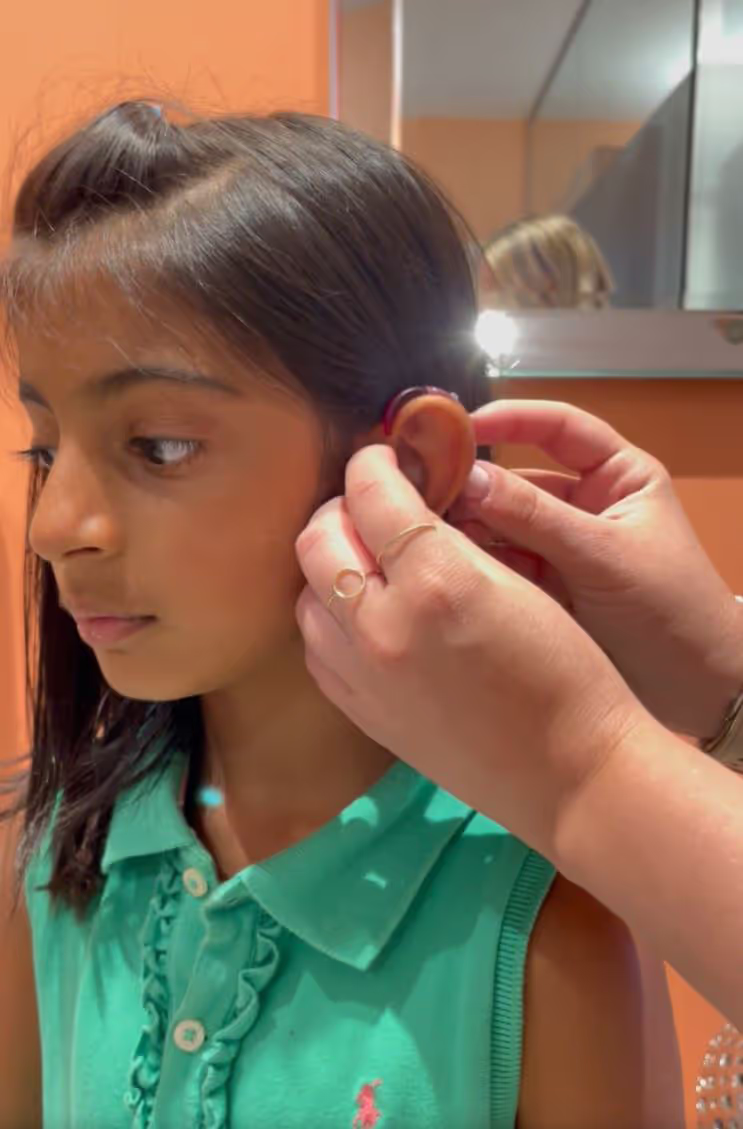
Pediatric hearing aids and ongoing follow-up support
Routine hearing checkups every two years for long-term monitoring
A child-friendly clinic environment where every visit is positive and comfortable
At AudioSense, your child's hearing health and happiness come first.

All babies should have a hearing screening within the first month of life. In Ontario, this is done through the Ontario Infant Hearing Program before your baby leaves the hospital or at a community clinic.
If your baby does not pass the initial screening, they should have a full hearing assessment by an audiologist before 3 months of age. Babies who are confirmed to have hearing loss should begin receiving support services by 6 months of age, according to the CDC's Early Hearing Detection and Intervention guidelines.
Beyond infancy, the American Academy of Pediatrics recommends hearing tests at ages 4, 5, 6, 8, and 10, with additional screenings during adolescence. You should also bring your child to see an audiologist any time you notice signs of hearing difficulty, speech delays, or if they are not responding to sounds as expected.
At AudioSense, we recommend a routine hearing assessment every two years for all children, even those with no known hearing concerns.
All babies born in Ontario should have a hearing screening up to two months corrected age. This hearing screen is offered free of charge through the Ontario Infant Hearing Program. Hearing screening identifies infants who should have more in-depth testing for hearing loss as early as possible.
Children identified with permanent hearing loss through this program receive audiology services at no charge at Infant Hearing Program sites across Ontario until school entry.
For children older than two months who are not part of the Infant Hearing Program, hearing tests at private audiology clinics are not covered by OHIP. OHIP may cover hearing assessments if they are performed by an Ear, Nose, and Throat (ENT) specialist with a referral from your family doctor. Many families use private health insurance benefits to cover the cost of hearing tests at audiology clinics. Contact our clinic for information about our pediatric hearing test fees and funding options.
The type of hearing test depends on your child's age and ability to respond.
For newborns and infants up to about 6 months, we use Otoacoustic Emissions (OAE) testing and Auditory Brainstem Response (ABR) testing. These tests measure the ear's response to sounds without requiring your baby to do anything. Your baby can sleep through the test.
For babies and toddlers aged 6 months to about 2 years, we use Visual Reinforcement Audiometry (VRA). Your child sits on your lap in a soundproof booth while we play sounds. When they turn toward the sound, a light-up toy or video rewards them.
For preschoolers aged 2 to 5 years, we use Conditioned Play Audiometry (CPA). Your child plays a simple game, like dropping a block in a bucket, each time they hear a sound.
Children aged 6 and older can usually complete Standard Audiometry. They raise their hand or press a button when they hear a tone, just like an adult hearing test.
We also perform Tympanometry at most appointments to check how well the eardrum and middle ear are working.
We do our best to obtain accurate results at the time of testing. If this is simply not possible, our billing is predicated on time spent clinically with you and your child and you will incur our testing fee as agreed.
The signs and symptoms of hearing loss are different for each child.
For babies, signs include not being startled at loud noises or turning to the sound source, not babbling long or short groups of sounds, and not saying their first word by one year of age.
For young children, delayed, limited or unclear speech, frequently inattentive listening, difficulty learning and failing to respond to conversation-level speech are signs to notice.
We can help determine if hearing loss is a factor in causing these behaviors in your children.
Make sure your child avoids putting any objects in their ear, such as a cotton swab, and keep them away from loud noises or make sure they wear hearing protection. Routine hearing tests at our clinic are important to identify any hearing loss.